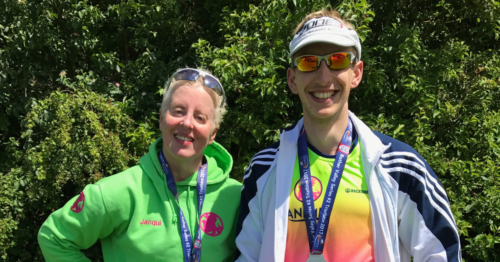
By Jacqui Saxon, BTF Level 2 coach, Trisutto certified, mentored in person by Brett Sutton. Started triathlon at 52; raced for Great Britain at 55. Last updated: 20 October 2026.
We have never made an athlete do an FTP test. Not once, in over a decade of coaching. We train by feel instead. We want to know how a session felt, not what a power meter said. It is not a gimmick or a cost-cutting shortcut. It is what Brett Sutton taught us in Switzerland, and in our experience it helps beginners settle into training faster than a spreadsheet plan does.
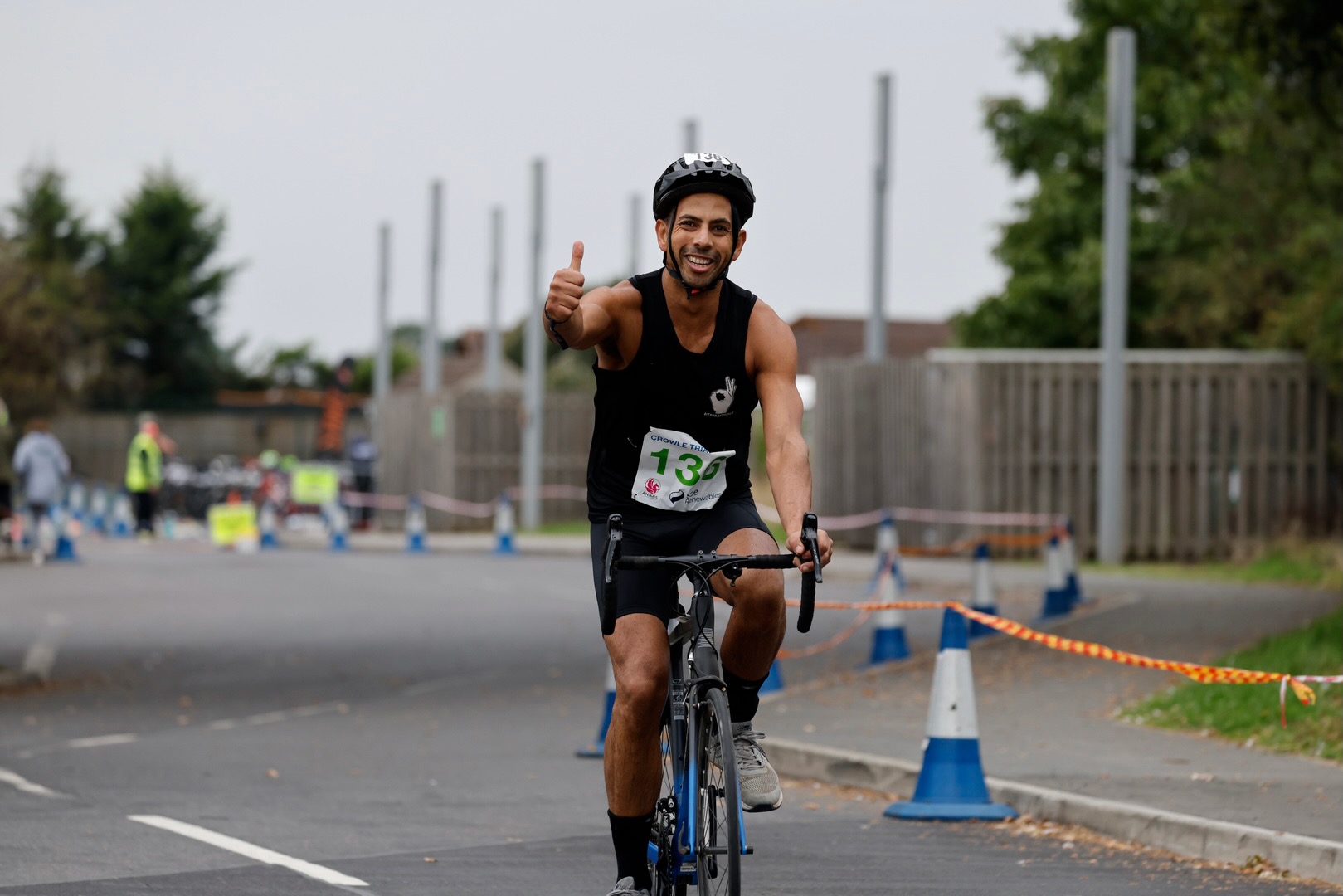
There is no FTP test to open your plan, and no power meter telling you what zone you are “supposed” to be in. Instead, we ask how hard something felt, properly hard, comfortably hard, or easy enough to chat through. Rate of perceived effort, not a number on a screen. Simple, but not the same as easy.
Me and Oliver both qualified as BTF Level 2 coaches in 2013, the year we founded Animis. So we looked at the plans the system wanted us to hand out and decided we had our own philosophy already. Years later, though, being mentored in person by Brett Sutton in Switzerland did not start that thinking. It confirmed it. Different words, same truth we had already landed on.
For example, a new athlete staring at a power number mid-session is not listening to their body. They are chasing a target that means nothing without months of data behind it. That is why we would rather you learn what “comfortably hard” feels like in your own legs than teach you to obey a screen. That skill stays with you long after any gadget’s battery dies. We say the same about heart rate in why we do not coach with heart rate zones, and explain how we pace sessions in the MMM intensity system.
Swim: pull buoy and paddles for every 1-to-1 athlete, no kickboards, no generic catch-up drills, with front crawl taught from scratch hundreds of times over. Bike: stomp the pedals, ride by feel, no cadence targets. In fact, any roadworthy bike will do, and we have coached people to their first race on a secondhand one from 2009. Run: 80% of your miles at an easy, chatty pace. “Run tall” fixes most problems on its own.
Yes, because this is not a beginner concession, it is the whole method. In fact, we have coached age-group world championship medallists the same way we coach someone doing their first sprint triathlon. Never a template pasted with your name on it. We train the athlete in front of us, whatever pace that athlete happens to be.
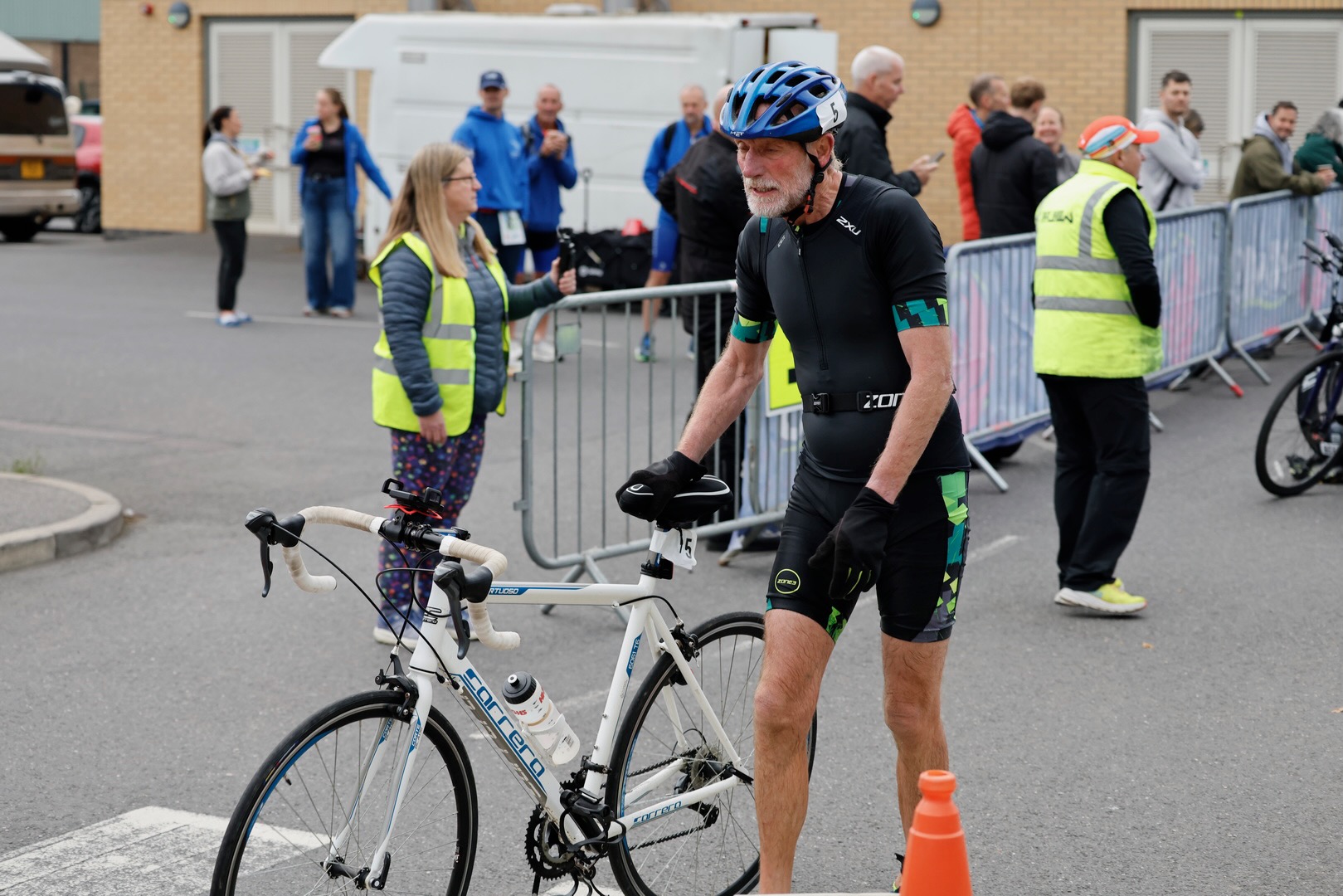
You do not need a £6,000 bike, or even a £1,000 one. Nor do you need a power meter, a smartwatch that talks back to you, or a spreadsheet full of zones. Instead, you need a roadworthy bike, something to swim in, a pair of trainers, and a coach who is watching how you are actually doing, not what a device says you should be doing. See how long it takes to train for your first triathlon.
Training by feel asks more of you at first. This is because you have to pay attention to your own body instead of outsourcing that to a device. Many people find that harder at the start, then realise they have stopped needing the gadget to tell them something they already know. That is the whole point. If you want a plan built around your real week, see our online triathlon coaching, or start with am I too old to start triathlon?
No. We have never required one, for beginners or for age-group athletes chasing GB qualification. Training by feel works at every level we coach.
Rating how hard a session felt, whether easy, comfortably hard or properly hard, instead of hitting a number from an FTP test or power meter. It is how every Animis athlete trains, whatever their pace.
Yes. Brett Sutton’s mentorship confirmed a philosophy we had already built teaching complete beginners: train by feel, keep it simple, and build the athlete in front of you rather than following a generic plan.
You will still see progress, through your coach’s eyes, session by session, and in how races feel. What you lose is the gadget noise. What you gain is actually knowing your own body.
No. Every athlete still has a plan, built around their real week. The structure comes from the coach, not from a device dictating your effort in real time.