By Jacqui Saxon, BTF Level 2 coach, Trisutto certified, mentored in person by Brett Sutton. I started triathlon at 52 and raced for Great Britain in age-group racing in 2015, at 55. Last updated: 20 October 2026.
You need four things sorted before race day: what you’re wearing, how you’ll move through transition, the handful of rules that actually get enforced, and a plan for the nerves. Get those right and everything else, from pace to splits to whether you podium, sorts itself out on the day. Here’s the lot, in the order you’ll actually need it.
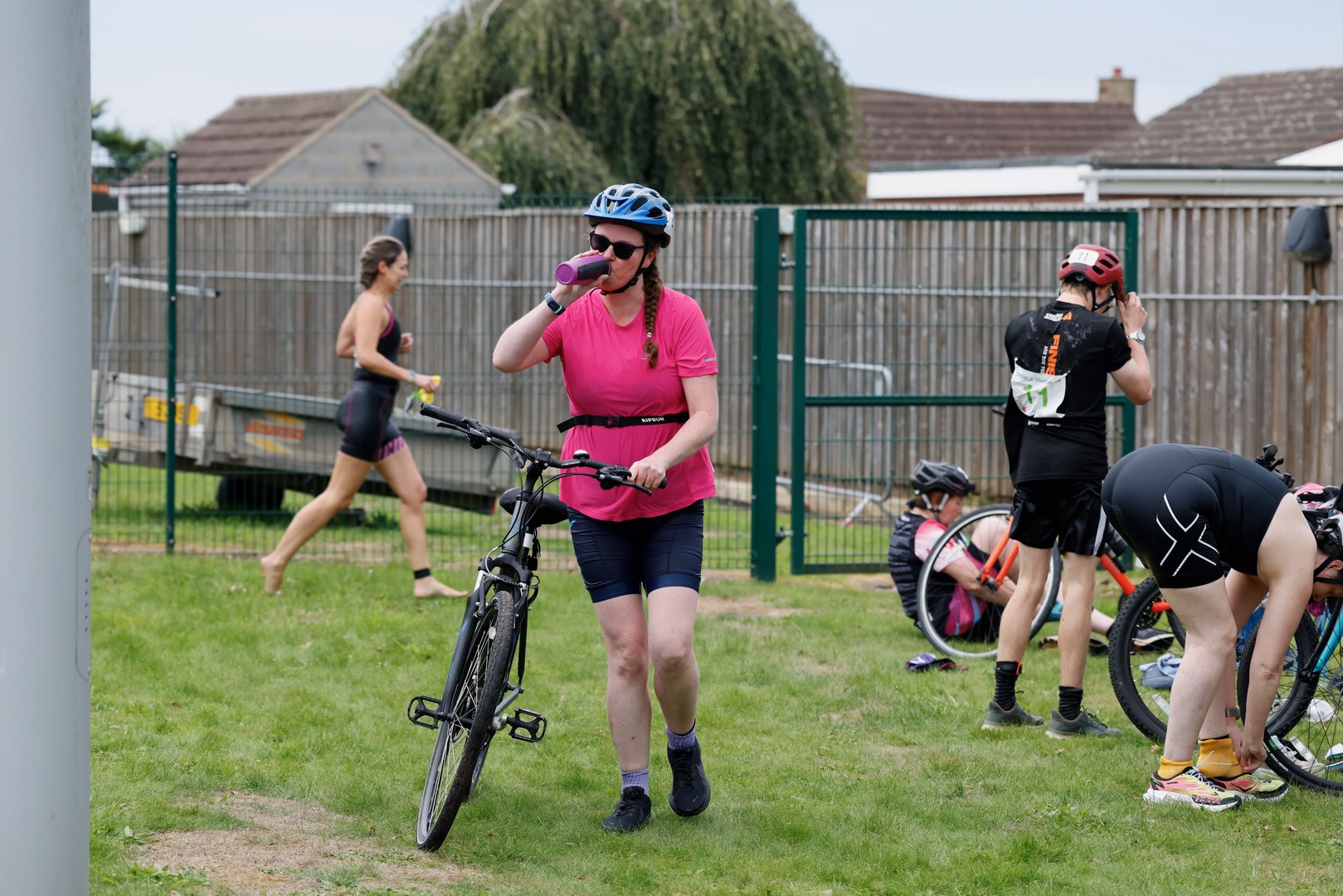
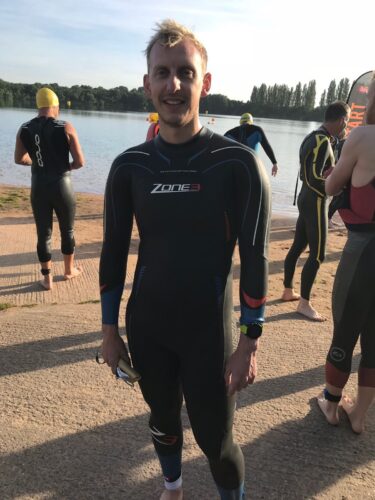
You’ve got two choices. Swim in your normal costume or trunks, then add shorts and a t-shirt over the top in transition. There’s a no-nudity rule, so whatever you add goes over your swimwear, not instead of it. Or wear a tri suit from the start and skip the faff entirely.
A tri suit is porous and quick-drying, built so you’re not sat wet on the bike and can run in it comfortably afterwards. It costs more upfront but saves you time and decisions in transition. Neither choice is “more serious” than the other, and plenty of quick club racers still use trunks and a t-shirt.
Transition is just how you move between disciplines: swim to bike, then bike to run. There are no set rules for exactly how you do it, but there is an order that works. I’d always recommend a small towel by your bike to dry your feet before your shoes go on. Stones down a shoe ruin a race faster than any wobbly swim.
Swim to bike (T1): dry your feet, get your top or tri suit sorted, then wheel your bike to the mount line. You don’t ride inside the transition area; you push the bike out and mount at the line. Your helmet goes on and gets fastened before you touch your bike, not while you’re running with it.
Bike to run (T2): helmet off first, rack your bike, shoes off, trainers on, sunglasses on, and go. In that order. People who rush T2 usually end up running with their helmet still on, which is a very memorable way to start a run.
Some people slow right down and do it methodically. Others fly through in under a minute. Both are fine. Find your pace and don’t panic if transition takes longer than you’d planned, because for a first race it almost always does.
Most of triathlon’s rulebook won’t touch you at beginner level, but three things will if you’re not ready for them. First, your helmet must be fastened before you touch your bike. Officials check this at the mount line, and it’s an easy penalty to avoid. Second, mount and dismount only at the marked lines, never before or after. Third, if your race has a draft zone (common even at age-group level), it’s roughly a bike length behind the rider in front. You’re allowed through it, but you have to be seen to be moving through, not sitting in it.
None of this is there to catch you out. It’s there so three hundred nervous first-timers don’t collide at a mount line. Read your race’s briefing pack the week before, because rules vary slightly by event and distance, and the briefing at a beginner-friendly race like Crowle will flag anything unusual.
Lay it all out the night before in the order you’ll use it. It sounds obsessive. It isn’t. It’s the single easiest way to stop 5am panic before it starts.
Everyone has them. I sat in the van at my very first event and watched through the windscreen, too frightened to start. I came back two weeks later and crossed the line. Nerves aren’t a sign you’re not ready. They’re a sign it matters to you, and that’s true whether it’s your first race or your fiftieth. If you’d like the full story, it’s in Am I too old to start triathlon?
If you’re stood on that start line wondering whether everyone else feels as calm as they look, they don’t. Most of the field remembers their own first time. Nobody’s watching you as closely as you think they are, because they’re all managing exactly the same knot in the stomach.
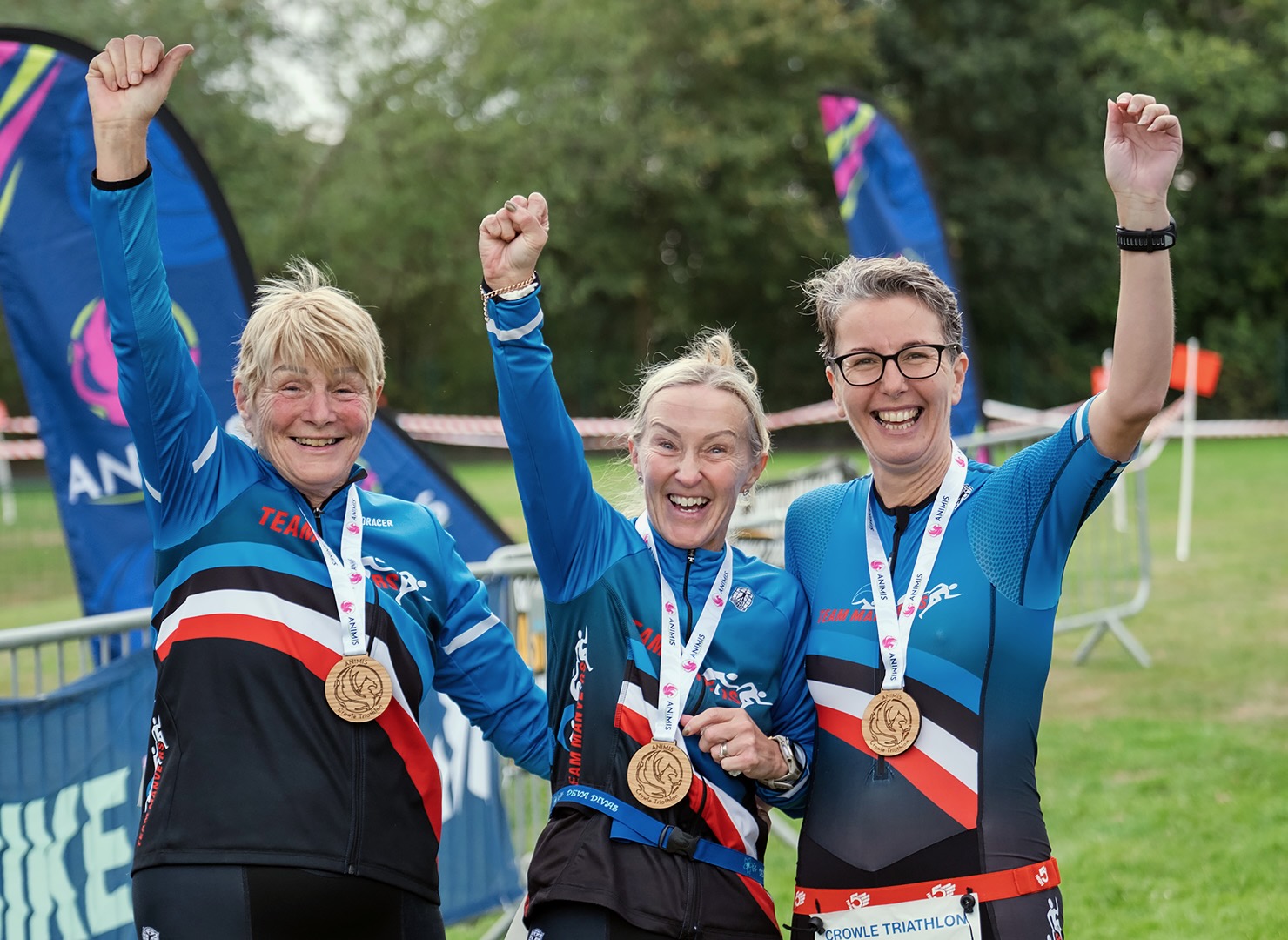
No. Beginner-friendly races like Crowle Triathlon are built flat, fast and first-timer friendly on purpose, and it won Triathlon England’s Small Event of the Year award for a reason. There’s always someone behind you, and the people who finish last get exactly the same medal as the people who finish first. Turning up is the hard part, and you’ve already done that.
Once you’ve got a first race under your belt, the next step for many people is qualifying for GB age-group triathlon. And if you’d like help getting to the start line, take a look at our coaching team.
Either your swim costume with shorts and a t-shirt added over the top in transition, or a tri suit worn throughout. Both are fine, and neither is more “proper” than the other.
Swim to bike: dry your feet, put your top on, fasten your helmet and wheel your bike to the mount line. Bike to run: helmet off, bike racked, running shoes on, sunglasses on, go.
Fastening your helmet before you touch your bike, mounting and dismounting only at the marked lines, and, if your race has a draft zone, being seen to move through it rather than sit in it.
Wetsuit or costume, spare goggles, tri suit or transition clothes, bike, fastened helmet, pump, running shoes, race number and timing chip, a towel for your feet, and water and food for afterwards.
Completely. I sat in the van too scared to start at my first event and came back two weeks later to cross the line. Nerves mean it matters. They do not mean you are not ready.