Meta description: Discover how recovery improves beginner triathlon training, prevents injury and supports consistent progress with an online triathlon coach.
Have you ever finished a hard session, checked your training plan and thought, “I’m shattered, but surely I should do more”?
You are not alone.
Many triathletes treat recovery as a reward for completing the “real” training. The swim, bike and run count. The easy day? That is apparently a day for feeling guilty while staring at your trainers.
But here is the uncomfortable truth: recovery is training.
Without it, your body cannot absorb the work you have already done. Fatigue keeps building. Technique starts to unravel. Small niggles become injuries. Training turns stale, racing becomes harder and the sport you once enjoyed starts to feel like another unpaid job.
At Animis Racing, we are a Trisutto-certified coaching provider. Our approach is built around sustainable progress, individual coaching and the principles of the Trisutto Training Manual. That means we do not ask you to train harder simply because the calendar says so.
We ask a better question: what will help you train well again tomorrow?
Training provides the stimulus. Recovery allows you to adapt.
Think of it like building a wall. Every session adds a brick, but recovery is the cement that holds the structure together. Keep adding bricks without cement and eventually the whole thing becomes a rather expensive pile of rubble.
This is why burnout and injury are not badges of honour. They are signs that the balance has gone wrong.
The Trisutto philosophy places Rule 2 – Avoid Injury at all costs at the heart of the programme. Early gains are willingly sacrificed if chasing them threatens consistency. Why? Because one spectacular week followed by three weeks injured is not progress. It is a poor subscription service.
Consistency wins.
You also need to remember Rule 1 – Enjoy Your Training and Racing. If your plan leaves you permanently exhausted, anxious and wondering whether you secretly hate bicycles, something needs to change.
Recovery protects your ability to keep turning up. That is where the long-term benefit lies.
One reason triathletes struggle to recover is that every session becomes vaguely hard.
It is not easy enough to restore you, but it is not hard enough to create a clear performance stimulus. You end up living in the grey area: Moderate every day, tired most of the time and never quite fresh enough to produce your best work.
The Trisutto approach uses the simple MMM Intensity System: Easy, Moderate, Medium and Mad. That language matters because recovery is not just “doing less”. It is knowing what the day is actually for.
Easy is not a lesser form of training. It has a job.
An Easy swim can help you move well without adding significant strain. An Easy bike can keep your legs ticking over. An Easy run can reinforce rhythm without creating unnecessary impact.
The important part is that Easy must actually feel Easy. That sounds obvious, yet loads of triathletes drift upward without noticing. One minute it is meant to be a recovery session. The next minute you are half-racing a stranger on Strava because a stiff breeze hit your ego.
Most recovery problems are not dramatic. They are sneaky.
Athletes stack too many “sort of hard” sessions together. They ignore the body’s quieter warning signs. They assume feeling flat is something to push through rather than something to understand.
That is where Rule 4 – Flexibility in the Program matters. The written plan is a guide, not a legal contract signed in blood. Good coaching is not just about prescribing work. It is about knowing when to press on, when to hold back and how to keep the whole week moving in the right direction.
That decision-making process is one of the biggest differences between copying training and being properly coached, and it is built into our personalised plans at Animis Racing.
The 10 Training Rules are not just for elite athletes. They provide a decision-making framework for every level, including beginners learning how to manage work, family, training and the occasional emergency involving a missing pair of goggles.
The short version? Recovery sits underneath nearly all of them.
If you ignore recovery, you stop enjoying training. You edge closer to injury. You forget that you are an individual. You become rigid when you should stay flexible. You try to progress through fatigue instead of through adaptation.
That is before we even get into how recovery affects your swim feel, your bike strength, your ability to run well off the bike and your long-term consistency across a full season.
In other words, recovery is not a side note. It is part of the architecture.
At the same time, this is where a lot of blog posts give away a big checklist of rules, numbers and protocols as if recovery were a meal deal: pick one sleep tip, one foam roller and a recovery shake, then job done.
That is not how it works.
The real system is more individual than that. It depends on your training load, life stress, durability, discipline and how you respond across the week. At Animis Racing, our coached plans build those decisions in for you, using Trisutto principles rather than generic internet hacks.
So yes, the 10 Rules absolutely shape recovery. But the practical application is where the real magic sits, and that is better handled inside a personalised programme than dumped into a blog post like a spoiler for the final episode.
Do you need speed to improve? Yes.
Do you need to chase speed all year and smash yourself into the pavement? No.
The Trisutto principle of Speed through Endurance means you develop the aerobic foundation that allows speed to appear and remain useful. Endurance helps you hold form, manage fatigue and run effectively after the swim and bike.
This is also where Reverse Periodisation fits. Rather than waiting until the end of a training cycle to introduce all your speed, the approach develops the required skills and controlled intensity throughout the year while continuing to build aerobic capacity.
Recovery keeps that process sustainable.
A well-recovered athlete can complete a quality Medium or Mad session when it is appropriate. A fatigued athlete may turn every session into a slow struggle, then wonder why their pace has stopped improving.
The answer is not always more intensity. Sometimes the answer is to make Easy genuinely Easy, recover and return with enough energy to train properly.
Recovery is not passive. It requires the same psychological qualities that support good training.
That final D is especially important. Recovery starts with awareness.
Are you unusually irritable? Is your normal Easy pace suddenly a battle? Are you struggling to sleep or feeling heavy before every session? These are useful clues, not personal failures.
What you do with those clues is where proper coaching matters. The best recovery decisions are rarely random. They sit inside a wider system, and that system is part of how we coach at Animis Racing.
You do not need to redesign your entire life tonight.
Start by treating recovery as part of training rather than the bit that gets skipped when life is busy. Keep your easy work honest. Notice when fatigue is building. Stop wearing exhaustion like it is a finisher’s medal.
Then get curious.
If you have ever wondered why some athletes seem to keep improving without constantly looking wrecked, the answer is not that they are soft. It is that their recovery is doing more work than most people realise.
The exact how is where things get interesting.
The value of recovery is not merely that you feel less tired. It is that you can train consistently, stay healthier, maintain motivation and unlock progress over months and years.
That matters whether you are beginning your first triathlon, returning after injury or chasing an age-group podium.
A generic plan may tell you what to do. A personalised plan should also consider whether you can absorb it.
Animis Racing provides monthly triathlon coaching with training plans, accountability and guidance across swimming, cycling, running and transitions. As a Trisutto-certified coaching provider, we build training around the individual rather than forcing every athlete through the same template.
You can also contact Animis Racing to discuss your goals and current training.
The strongest athlete is not necessarily the one who trains hardest every day. It is the one who can keep training, keep learning and keep enjoying the journey.
Recovery is not time away from your progress.
It is where your progress becomes real.
And if you want to know how we actually build recovery into a plan without losing momentum, that is exactly the sort of detail we keep inside coached training rather than giving away in a blog post. If your current training leaves you tired, stuck or one bad week away from a meltdown, let’s talk. We will show you how the system fits your life, your goals and your engine.
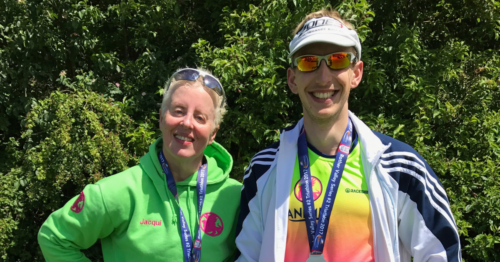
We're Coaches Jacqui and Oliver Saxon, the Animis Coaching Team.
We are a mom and son coaching team who have changed our lives through the sport of triathlon. We aim to break down the mysteries of triathlon training and show you, the avid traithlete, how simple and flexible it can be so triathlon training really does become part of your lifestyle and not just a hobby.