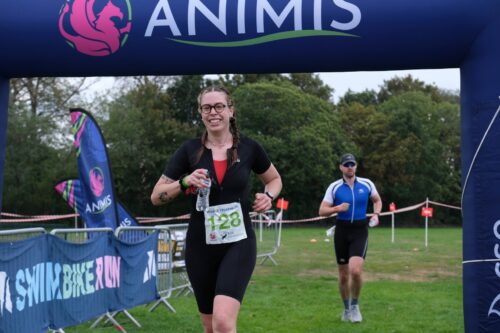
By Jacqui and Oliver Saxon. Jacqui is a BTF Level 2 coach, Trisutto certified, mentored in person by Brett Sutton. She started triathlon at 52 and raced for Great Britain in age-group racing in 2015, at 55. Last updated: 20 October 2026.
Stop, get your breath, and ask for help. Panic in open water is normal, it passes, and you can still finish the race. If there’s a safety kayak nearby, hold on to it, get your breathing back, and let the person in it say a few kind words. It’s often all you need to get on your way.
Completely. It happens to strong pool swimmers, to first-timers and to people who’ve raced for years. Cold water, no black line to follow, a crowd of arms and legs around you and a chest that suddenly won’t fill: any one of those can tip you over.
Jacqui: It was the London Triathlon in 2014. I got in the water and I couldn’t get my breath. I was very panicky, properly panicky, and I couldn’t settle it.
There was a safety person in a kayak. They stayed with me, they were encouraging, and that was what got me through. I held on, got my breath back, and they kept telling me I could do it. Then I carried on and completed the race.
That’s the bit I want you to take from this. I didn’t have a clever trick. I had a kind person in a kayak and a minute to breathe. Panic felt enormous at the time, and it was over far sooner than I thought it would be.
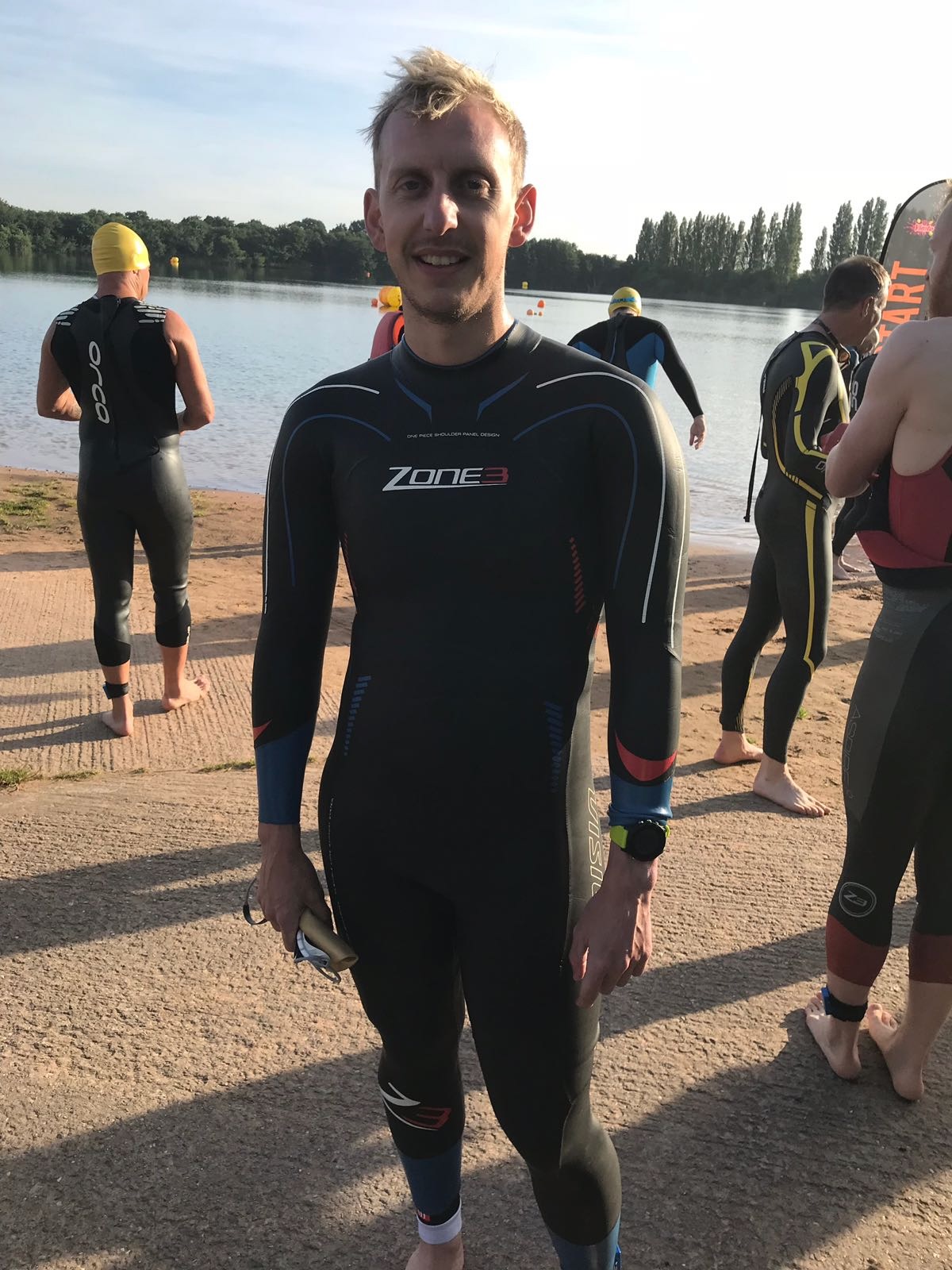
Oliver: Panic isn’t a swimming problem, it’s a breathing problem. When you can’t breathe out properly, the next breath won’t come. So slow the out-breath down, get calm first, and speed can wait. Swimmers who finish are very rarely the ones who never panicked. They’re the ones who stopped, sorted it and carried on.
Start at the back or the side, away from the crowd, even if it costs you a few seconds. Get in and acclimatise before the gun goes, and splash some water on your face. And practise open water before race day so it isn’t a first. If you’re still learning to swim well, our guide to learning front crawl as an adult is a good place to start, and our swim coaching can help you build confidence.
If you’d like to read more about how nervous first-timers get through race day, see what you need to know for your first triathlon race day.
Yes. It is very common, even for people who swim well in a pool. Cold water, no black line and a crowd around you can all make it hard to catch your breath.
Stop, get your breath, and let a safety kayaker know. In many races you can hold on to the kayak while you recover. Ask in your race briefing what your event allows.
It depends on the event, so check your race briefing. I held on to a safety kayak at the London Triathlon in 2014 to get my breath back, and then carried on.
Start at the back or the side, away from the crowd, breathe out steadily into the water, and practise open water before race day so it is not a surprise.
You can. I could not get my breath at the London Triathlon in 2014, a safety kayaker encouraged me, and I went on to complete the race.