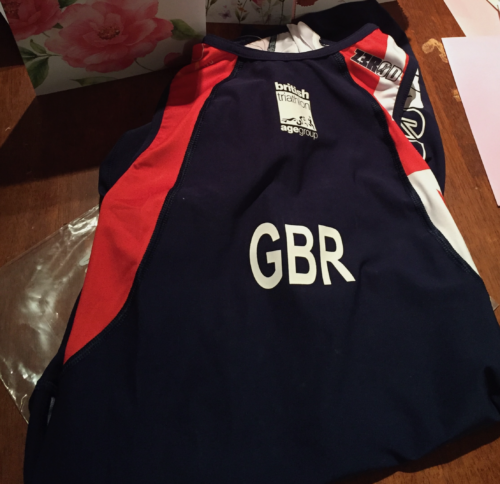
By Jacqui Saxon, BTF Level 2 coach, Trisutto certified, mentored in person by Brett Sutton. I started triathlon at 52 and raced for Great Britain in age-group racing in 2015, at 55. Last updated: 20 October 2026.
Yes, and you need far less time than you think. For a first sprint triathlon, three to four hours a week is enough: one swim, one bike, one run, and a little overlap as race day gets close. You don’t need early starts every day or empty weekends. You need a week that fits the life you’ve actually got, and the discipline to stick to it.
How many hours a week do I really need?
Most beginners need three to four hours a week for a sprint triathlon. That’s roughly one swim, one bike session and one run, each about an hour, with a bit of extra time as the race gets closer. Nobody needs fifteen hours. Those numbers belong to professionals, and you’ve got a job, a home and people who like seeing you. For the longer view, see how long it takes to train for your first triathlon.
Do I have to train swim, bike and run every day?
No. In my experience most amateur triathletes don’t, and believing you have to is one of the biggest myths in the sport. When I coach athletes, two disciplines in one day is the most I’ll ask, say a swim in the morning and a run later. For sprint and Olympic distance, one discipline a day, done consistently, is often plenty.
What does a minimum effective week look like?
Here’s a simple shape, and you can shuffle the days around your shifts:
- One swim: an hour at the pool. Fits a lunchtime, an early morning or an evening.
- One bike: an hour, steady. A turbo or a loop round the lanes both count.
- One run: an hour, at a pace you could chat at.
- Optional extra: a short easy session when your week allows, never when it doesn’t.
If your week falls apart, you do what you can and carry on. One missed session never ruined a race.
Why does easy pace matter so much when time is short?
Because about 80% of your training should be easy. Chatty pace, where you could hold a conversation without gasping. When you’re short on time, the temptation is to make every session hard to “make it count”. That’s how people get tired, injured and fed up by week six.
Here’s how I handle the hard days. If you’ve had a hard swim, I won’t also ask for a hard bike or run that day. One hard thing, with everything else kept easy, is how you stay fresh enough to keep turning up. Turning up consistently beats any single heroic session.
Do I need a power meter or heart rate data to train efficiently?
No. I’ve never made an athlete do an FTP test. We train by feel, so I want to know how hard something felt, not what a screen said. It saves you time, because there’s no data admin on top of an already full week, and it teaches you to listen to your body, which is the skill that actually carries you through race day. I explain more in why we coach without FTP tests or power meters.
What do I do on shift work, with kids, or when the mornings are dark?
You plan around the week you’ve got, not the week you wish you had. Shift patterns change, children get ill, work runs over. A good plan bends. The sessions stay small enough that one bad day doesn’t sink the whole week, and you can pick up again the next day without guilt.
For dark mornings, move the session. Train at lunchtime, after work or at the weekend, and keep the pool and the turbo for the days when the weather or the light is against you. Consistency matters. The time of day doesn’t.
Why do generic plans fall over in real life?
A PDF doesn’t know you work nights. It doesn’t know your daughter has a school play on Thursday or that your knees hate Mondays. It gives you week four whether or not you’ve survived week three. That’s why Oliver and I coach 1-to-1: we build the plan around your actual week and rebuild it when the week changes. Train the athlete in front of you, not the spreadsheet. You can see how it works on our online triathlon coaching page.
What actually derails people?
It’s rarely fitness. It’s doing too much too soon, ignoring a niggle until it becomes an injury, or choosing a plan that was never built for a life with a job and a family in it. Steady, slightly boring, regular training beats a heroic January every time.
Where do I start this week?
Pick three sessions. One swim, one bike, one run. Put them in the diary like you’d put in a dentist’s appointment. Keep two of them easy. Do them for four weeks and see how you feel. That’s your plan, and it’s more than most people ever begin. I sat in a van and watched my first event through the windscreen. Two weeks later I crossed the start line. Small, steady and started beats perfect and postponed. If you think you might be too old to begin, read Am I too old to start triathlon?
Quick answers
How many hours a week do I need to train for a first triathlon? Three to four hours is enough for most beginners at sprint distance: one swim, one bike and one run, each around an hour.
Do I have to train all three disciplines every day? No. When I coach, two disciplines in a day is the most I will ask, and for sprint and Olympic distance one discipline a day, done consistently, is often plenty.
What if I work shifts or have young children? Plan around the week you actually have. Keep sessions short and flexible, so one missed day does not wreck the week, and pick up again the next day.
How do I train when the mornings are dark? Move the session to lunchtime, after work or the weekend. The time of day does not matter; turning up regularly does.
Do I need a power meter or training data? No. We train by feel, which keeps your week simple and teaches you to read your own body.
Is a coach worth it if my time is limited? A 1-to-1 coach builds your plan around your real week and changes it when life does, which is exactly where generic plans fall down. DM us PLAN.