Meta description: Discover the MMM Intensity System for beginner triathlon training and learn how to pace sessions by feel with a Trisutto-certified coach.
Have you ever started a training session with three different numbers in your head?
Heart rate says you are going too hard. Your watch says you are right on target. Your legs say they would rather be watching television.
Which one do you trust?
At Animis Racing, we believe training should be simpler than that. The Trisutto approach uses the MMM Intensity System: Easy, Moderate, Medium and Mad. Four practical levels that help you understand how a session should feel, rather than making you a slave to heart-rate zones, power targets or pace charts.
Does that mean numbers are useless? No. But they are not the whole story.
Your body is not a laboratory machine. Sleep, stress, weather, hills, work and family life all affect how a session feels. Learning to read those signals can help you train consistently, avoid overtraining and make better decisions on race day.
That is the real bang for your buck.
Numbers look precise. That is their charm.
A target pace of 5:00 per kilometre feels wonderfully scientific. So does holding 220 watts or keeping your heart rate in a particular zone. But what happens when you have had a poor night’s sleep, a stressful day at work or a stiff breeze in your face?
The number has not changed. You have.
Many athletes force themselves to hit the target anyway. The session becomes harder than intended, recovery takes longer and the next few workouts suffer. Eventually, progress stalls. You may even start believing that you are not fit enough, when the real problem is that you are training too hard too often.
The Trisutto Training Manual takes a more practical view. The MMM system gives you a common language for effort, while allowing your body to guide the final decision.
If a planned Medium session feels like Mad, you adjust. If an Easy ride feels comfortable, you stay relaxed rather than turning it into an accidental race.
That is not weakness. It is intelligent training.
The four levels are not complicated zones requiring a spreadsheet, a laboratory test and the patience of a saint. They are simple effort anchors that help you judge how training should feel on a given day.
That matters because most athletes do not struggle from a lack of data. They struggle from misjudging effort. They turn Easy into Moderate, Moderate into Medium, and then wonder why they feel flat by Thursday.
MMM gives you a cleaner way to think.
Easy is relaxed, sustainable and controlled. It is the work that helps you absorb training, build aerobic strength and stay consistent without digging a hole.
Moderate is purposeful but still under control. You know you are training, but you are not straining. This is often where athletes can do very useful work without tipping into needless fatigue.
Medium is strong, focused and demanding. It matters because this is where many athletes get pacing badly wrong. Too easy, and the session misses the point. Too hard, and it drifts into something it was never meant to be.
Mad is very hard and used sparingly. It has a place, but not as your default personality for every Tuesday session. Used well, it sharpens. Used badly, it just wrecks the rest of the week.
The real value of MMM is not memorising four labels. It is learning how to recognise them honestly in your own body, across swim, bike and run, and then apply them with discipline.
That is also where a lot of the nuance lives.
On paper, MMM looks straightforward. In practice, knowing when a Moderate session should stay Moderate, or when a planned Medium day needs adjusting, is where proper coaching earns its keep. That is the bit many articles skip past because it is harder to explain in a neat little chart.
So yes, you can understand the MMM Intensity System quickly. But applying it well, week after week, in real life, is a deeper skill.
The beauty of MMM is that it travels with you from the pool to the road.
In swimming, cycling and running, the labels stay the same, but the feel changes with the discipline, your background and the purpose of the session. That is one reason the system matters so much. It gives you one shared language for effort without pretending every sport should feel identical.
In the Trisutto approach, that language supports bigger principles like swimming as foundation work, cycling with purpose, and building speed through endurance rather than chasing suffering for its own sake.
Could I unpack exactly how MMM should be applied in each discipline? I could.
But this is one of those areas where a blog post should not pretend to replace real coaching. The finer detail is what turns a simple idea into a powerful one, and it is exactly why athletes work with a Trisutto-certified coach at Animis Racing.
The headline version is this: the system helps you keep the right sessions easy enough, the key sessions honest enough, and the whole week sustainable enough that you can actually improve rather than just feel tired.
The MMM Intensity System works because it sits inside the wider Trisutto framework. The 10 Training Rules provide the guardrails:
These rules also explain why training by feel matters. Rule 3 recognises that every athlete has different strengths, weaknesses, commitments and recovery needs. Rule 4 reminds you to listen to your body. Rule 5 encourages gradual progression rather than the traditional idea of leaving endurance behind while piling on speed at the end.
You can complete an MMM session without a heart-rate monitor, power meter or GPS. You may still use technology as a useful reference, particularly for cadence on the bike, but your body remains the primary source of information.
Training by feel takes more than fitness. It takes the five D’s:
That final D is where many athletes unlock progress. After each session, ask yourself: How did Easy feel? Did Moderate stay controlled? Did Medium remain sustainable? Did Mad have a clear purpose?
You are building an inner pacing system. Over time, you become less dependent on a device telling you what your body already knows.
Could you work this out alone? Possibly.
Could you miss the most important subtleties by trying to piece it together from blogs and social posts? Also yes.
At Animis Racing, we provide Trisutto-certified coaching for beginners, age-group athletes and ambitious competitors. Our online coaching support uses personalised triathlon training plans that account for your goals, experience, schedule and recovery.
The MMM Intensity System is simple enough to understand, but powerful enough to change how you train when it is taught properly. Knowing what Easy, Moderate, Medium and Mad mean is one thing. Knowing how to use them at the right time, in the right order, for the right athlete, is another game entirely.
That is where coaching comes in.
If you want to stop second-guessing every session and start understanding the deeper logic behind the Trisutto approach, get in touch with Animis Racing. We will not just hand you a plan and wish you luck. We will show you how the system really works, when it matters most, and why good pacing can quietly transform everything else in your training.
You can also hear more about our approach in our podcast episode on online coaching.
You do not need more gadgets, more jargon or another cookie-cutter plan from the internet. You need the right guidance, the right effort and a coaching approach that reveals the next layer when you are ready for it.
Learn the labels now. Discover the real system with a coach.
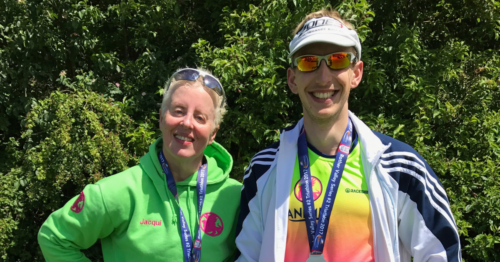
We're Coaches Jacqui and Oliver Saxon, the Animis Coaching Team.
We are a mom and son coaching team who have changed our lives through the sport of triathlon. We aim to break down the mysteries of triathlon training and show you, the avid traithlete, how simple and flexible it can be so triathlon training really does become part of your lifestyle and not just a hobby.