Have your bike splits stopped improving, even though your power numbers look respectable?
Perhaps you can produce decent watts for a short interval, but they do not seem to transfer to speed on the road. Or maybe every climb in a race feels like a personal audition for The Walking Dead. Worse still, you are worried that one stiff breeze will see you dropped from the group.
You are not alone.
For many triathletes, the missing ingredient is not another complicated gadget, interval or turbo session. It is usable bike strength. The sort you can carry over a long course, through rolling terrain and into the run.
That is where Trisutto-style low-cadence bike training comes in.
At Animis Racing, we are a Trisutto-certified coaching provider. We use simple, practical methods to help athletes build sustainable performance. One of those methods is known as “stomping” , riding a big gear at a low cadence to develop strength you can actually race on.
Does a higher power number automatically make you faster? No. It depends on how you can apply that power, how long you can hold it and what is left in your legs afterwards.
You might be able to smash a short interval on the turbo. Brilliant. But a 70.3 triathlon is not a video game where you collect one enormous power-up and spend it all before the next corner.
You need to produce controlled force repeatedly.
If your legs fatigue early, your cadence becomes frantic or your position falls apart on hills, your power may not be particularly useful. The same applies if you burn too much energy on the bike and then shuffle through the run like a reluctant extra in a zombie film.
Trisutto training focuses on the demands of triathlon rather than cycling in isolation. The aim is to build speed through endurance , developing the strength and durability to maintain a useful pace without emptying the tank.
That is the value of stomping gears.
Stomping means using a bigger gear and a lower cadence than you might normally choose.
Instead of rapidly spinning small gears, you apply a firm, controlled push through the downstroke. The upstroke remains relaxed. You are not trying to pull the pedal upwards or force perfect circles. You are teaching the legs to produce useful force with each deliberate pedal stroke.
Why does that matter? Because triathlon bike strength is not just about flashy peak power. It is about being able to press on the pedals when the road drags up, the wind turns awkward and your legs are already carrying fatigue from the swim and whatever life threw at you before breakfast.
Done properly, low-cadence stomping builds that practical strength. It can help you recruit more muscle, improve your ability to push against resistance and make you feel more composed when the gear does not want to move easily. In plain English: you become harder to slow down.
What does it feel like?
Not like a frantic cardio thrash. More like controlled muscular pressure. Your breathing is usually steadier than you might expect, but your legs know they are working. You feel tension through the quads and glutes, a solid connection to the pedals and that unmistakable sense that each push needs intent. Think less “spinning hamster wheel” and more “trying to move a heavy door that actually opens if you stay patient”.
Does that mean you should immediately select the biggest gear available and grind until your knees stage a formal protest? Absolutely not.
The position, gear, terrain and session must suit you. The effort should be controlled. You should remain seated, stable and technically sound. If your hips rock, your back tightens or you feel pain in the knees, the resistance is wrong for you on that day.
The goal is strength, not drama.
So what does a proper stomping session actually look like?
That is where I am going to be slightly annoying and say: it depends.
Yes, there are classic Trisutto-style ways to use stomping on the turbo or on a safe stretch of road. Yes, the work is simple rather than fancy. And yes, it usually lives inside a clear structure with Easy riding around the harder efforts so you can produce quality pressure rather than random suffering.
But the exact prescription is where coaching earns its keep.
A good session depends on your current bike strength, injury history, race distance, fatigue, confidence with low cadence work and where you are in the wider training cycle. Get it right and stomping can build race-ready strength. Get it wrong and you are just mashing gears, collecting soreness and telling yourself it is “character building”.
The useful bit to know as a reader is this: the best stomping sessions are not heroic. They are measured. They use controlled muscular force, tidy form and just enough work to create adaptation without wrecking the rest of the week.
That is very Trisutto.
You are not trying to win Tuesday. You are trying to become stronger for race day.
If you are curious about how hard, how long and how often this should appear in your own plan, that is exactly the sort of detail that should be prescribed to the athlete, not copied blindly from a blog post.
The MMM Intensity System keeps the session simple:
A low-cadence interval can feel hard in the muscles while remaining controlled aerobically. That does not automatically make every repetition “Mad”. Your coach may prescribe the effort according to your current ability, fatigue and place in the training cycle.
One of the key Trisutto principles is that you never need to go 100 per cent. “Mad” is not permission to throw technique out of the window. It is a strong, uncomfortable effort performed with control.
If you cannot maintain good form, stay at Medium or return to Moderate. That is smart training, not failure.
Stomping is only useful when it sits inside a sensible training plan. The Trisutto 10 Training Rules provide the guardrails:
These rules are particularly important for a 70.3 triathlon training plan. You are not training for one excellent five-minute effort. You are training to swim, bike and run well on the same day.
The bike session must improve your race rather than ruin the next three days.
What changes when your legs become stronger?
First, hills become less intimidating. You may still dislike them , I have yet to meet anyone who genuinely looks forward to every climb , but you can deal with them without immediately reaching for the smallest gear.
Second, your pedal stroke becomes more economical. You can apply force without relying solely on rapid cadence and cardiovascular effort.
Third, you build confidence. That matters. When you know you have trained to handle resistance, headwinds and tired legs, the course feels less like an ambush.
Finally, stronger bike legs can support the run. Trisutto coaching is built around the demands of all three disciplines. A bike session that leaves you completely shattered may look impressive in your training log, but it is not necessarily helping you run well afterwards.
This is why Trisutto places such emphasis on strength through practical, sport-specific work. You build the engine through endurance, then teach it to produce useful speed when fatigue arrives.
New to low-cadence training? Start conservatively.
You could begin with:
Do not force the cadence lower simply because a number looks impressive on your bike computer. The right cadence is the one that allows you to apply controlled force without pain or unnecessary tension.
Keep the first sessions short. Leave enough recovery between them. If your knees, hips or lower back hurt, stop and reassess. Training discomfort and injury pain are not the same thing.
This is also where the 5 D’s help:
Strength does not appear after one session. It is earned through repeated, well-judged work.
Could you add stomping to your week by yourself? Yes, but the timing matters.
It needs to fit alongside your swimming, running, recovery and life outside triathlon. The ideal amount of low-cadence work depends on your experience, your race distance, your current fatigue and your ability to maintain good technique.
This is where plenty of athletes go slightly off-script. They hear “big gear, low cadence” and either make it too hard, too frequent or too random. That is a bit like being given the name of a recipe and assuming you can guess the oven temperature. Sometimes you get dinner. Sometimes you get charcoal.
A good online triathlon coach will not simply send you a hard bike session and wish you luck. They will decide when stomping belongs in the plan, how it should evolve and how much is enough for you to gain strength without sabotaging your swim or run.
That is the approach we take at Animis Racing. As a Trisutto-certified coaching provider, our online training and coaching service provides structured support built around your goals, your schedule and your current ability. We create personalised triathlon training plans using clear guidance rather than needless jargon.
Whether you are preparing for your first middle-distance race or chasing a stronger age-group performance, the aim remains the same: sustainable progress without injury or burnout.
And if you are reading this thinking, “Right, but what would the right stomping session look like for me?” Good. That is exactly the question worth asking.
Stomping gears is not a magic trick. It will not turn every climb into a downhill, and it will not replace endurance, recovery or sensible race pacing.
But it can give you something highly valuable: strength that transfers to the road.
Build that strength patiently. Use the MMM system to control the effort. Follow the 10 Training Rules. Keep your technique tidy. Then combine the work with the endurance needed to hold pace when the race gets long.
That is how you move from simply producing watts to using them well.
And when the hills arrive, the wind picks up and the legs begin to complain, you will have more than numbers on a screen. You will have confidence you can race on.
If you want the exact prescription, that is the part we keep for coached athletes. Because the magic is not in copying a session off the internet. It is in applying the right session at the right time, in the right dose, for the right athlete.
If you want to unlock that properly, have a look at our online training and coaching service. We will show you where stomping fits, how to use it without wrecking your week and why the smallest changes in prescription can make a massive difference on race day.
Meta description: Learn how low-cadence stomping builds bike strength for triathlon and why the right coaching prescription makes it work.
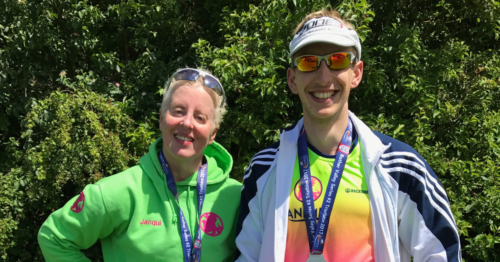
We're Coaches Jacqui and Oliver Saxon, the Animis Coaching Team.
We are a mom and son coaching team who have changed our lives through the sport of triathlon. We aim to break down the mysteries of triathlon training and show you, the avid traithlete, how simple and flexible it can be so triathlon training really does become part of your lifestyle and not just a hobby.